
 Website visitor asks for help
Chat, voice, or video starts from the page they are viewing.
Website visitor asks for help
Chat, voice, or video starts from the page they are viewing.
Chat, calls, and PBX routing
One website conversation path from live chat to voice, video, and your existing phone system.
Modern websites often stack separate tools for live chat, callbacks, phone routing, and analytics. Laleo is built to keep the visitor, the operator, and the conversation context together while the call path can still route into the PBX or SIP trunk your team already uses.
Website visitor asks for help
Chat, voice, or video starts from the page they are viewing.
Laleo keeps context
 Dashboard, app, or PBX
Answer in Laleo or route to a trusted SIP peer, queue, or phone destination.
Dashboard, app, or PBX
Answer in Laleo or route to a trusted SIP peer, queue, or phone destination.
The fragmented workflow problem
Most sites make the visitor switch channels right when intent is highest.
Text-only chat can answer simple questions, but the moment a visitor needs to speak, many tools push them to a phone number, a callback form, or a separate contact-center workflow. That handoff loses page context, slows the response, and asks the visitor to repeat what they already explained.
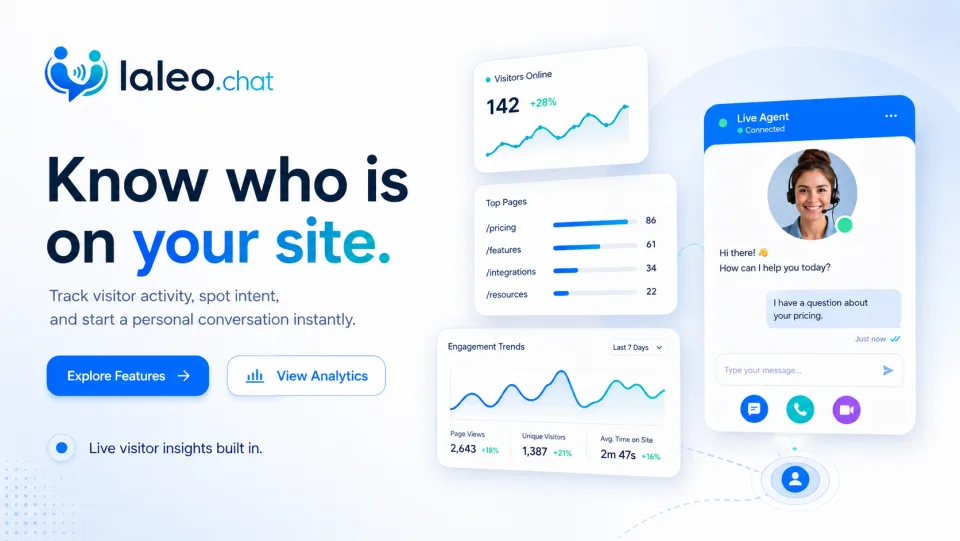
Laleo treats chat, browser voice, browser video, and SIP routing as parts of the same session. The operator can see the page, the history, the visitor source, and the call state in one place.
Escalate without losing context
A conversation can start as a message and move into a browser voice or video call while the transcript and visitor activity remain attached to the same visitor record.
Route calls where your team works
Operators can answer in the Laleo dashboard or Android app, and paid plans can route calls through SIP peering, Direct SIP, service queues, or PSTN forwarding.
Use open phone standards
Laleo is designed for SIP-enabled systems such as Asterisk, FreeSWITCH, hosted PBXs, and carrier voice cores, so your existing call flows can stay in control.
Measure the whole journey
Page activity, source tags, chat messages, call requests, answer timing, missed calls, and operator activity can feed dashboards, APIs, MCP tools, and signed webhooks.
What this looks like in practice
A visitor can talk from the page instead of leaving to call a number.
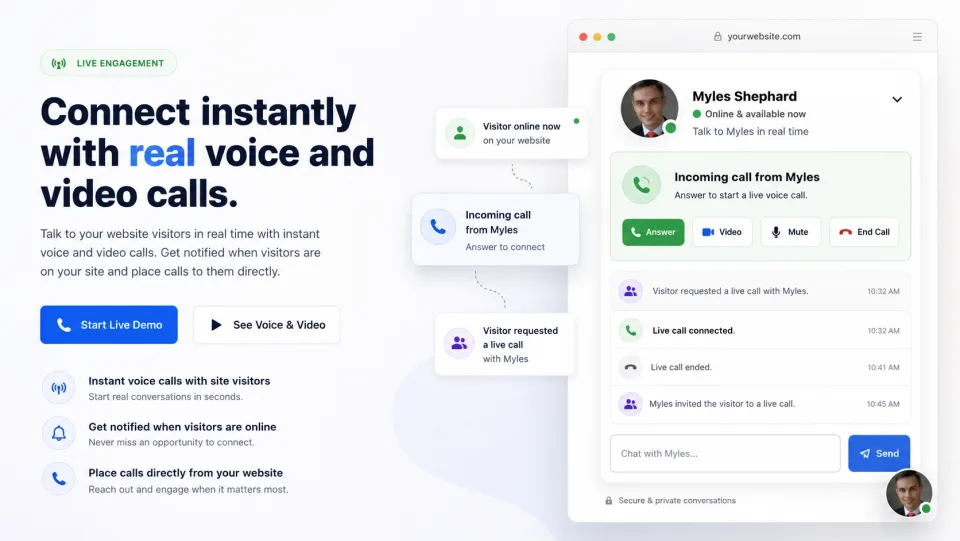
Imagine a buyer looking at a product page. They open the widget, ask a question, and the operator sees that page instantly. If the question needs a real conversation, the visitor clicks to talk. Laleo can ring the operator in the browser, the mobile app, a PBX queue, a direct SIP destination, or a phone number depending on the widget settings.
The visitor stays in the browser. The operator keeps the context. The business keeps its phone system.
Agent-ready by design
Laleo publishes OpenAPI, llms.txt, MCP tooling, and signed webhooks so automation agents can list visitors, find waiting calls, create handoff links, and help summarize analytics.
Built for telephony teams
SIP peering lets a website-originated call become a clean route into your voice core, with trusted peer controls and routing choices managed in the dashboard.
Unified visitor intelligence
The same visitor record can carry source, campaign tags, page history, chat, call events, voice messages, notes, and future CRM integration payloads.
Operators stay accountable
Teams can see who is in a chat or call, track missed requests, and route work to service queues instead of treating every widget as a one-person inbox.
Bridge your website conversations to the team that can answer
Sign up with email OTP, create a widget, and start testing chat, browser calls, SIP routing, and visitor analytics from the Laleo dashboard.